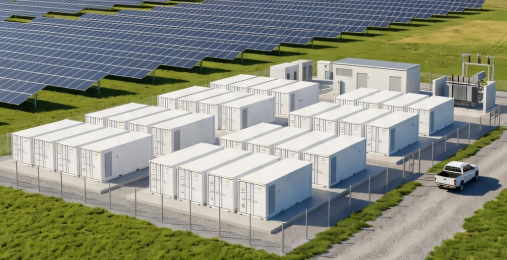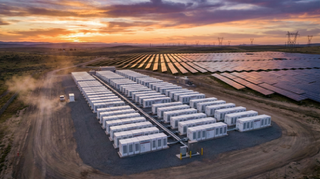



Battery Energy Storage Systems (BESS) are becoming an increasingly important part of modern power systems, supporting renewable energy integration, grid flexibility, peak management, ancillary services and system stability.
For projects in Saudi Arabia, the UAE and the wider GCC, however, BESS engineering must address a demanding operating environment. High ambient temperatures, solar heat gain, dust and sand, humidity variations in coastal areas, and demanding grid operating conditions can all influence battery life, power-conversion performance, HVAC requirements, safety and long-term availability.
As utility-scale BESS deployment accelerates across Saudi Arabia and the UAE, thermal performance is no longer simply an equipment-selection consideration. It is a system-level engineering and bankability issue.
A reliable hot-climate BESS must be designed around the actual site conditions, operating profile, grid requirements, equipment limitations and long-term performance obligations - not around laboratory conditions alone.
01.Temperature Is a Critical BESS Design Variable
Elevated temperature accelerates battery ageing, with the effect depending on battery chemistry, state of charge, operating profile, C-rate, cell design and duration of thermal exposure. In hot regions, high ambient temperatures can therefore affect:
- Battery capacity retention
- Calendar and cycle ageing
- Round-trip efficiency
- HVAC energy consumption
- Available power
- Component lifetime
- Long-term availability
- Warranty and degradation assumptions
Even when a BESS enclosure is equipped with HVAC, the internal thermal environment must be evaluated carefully. Temperature gradients between racks, modules or cells can create uneven ageing and localized thermal stress.
The design should therefore use site-specific weather data and worst-case operating conditions, rather than relying only on annual average temperatures. Battery operating temperature and allowable temperature uniformity should be established against the cell, module and battery-system manufacturer's requirements and verified through thermal analysis.
Design the thermal system for the actual site envelope and worst credible operating conditions - not the average day.
02.Thermal Management Must Be Designed at System Level
BESS thermal performance depends on the interaction between:
- Battery cells and modules
- Battery racks
- BMS
- HVAC
- PCS
- Auxiliary systems
- EMS
- Enclosure design
- External environmental conditions
Thermal management should therefore be treated as an integrated engineering function rather than an isolated HVAC package. The engineering process should consider HVAC capacity under peak ambient conditions, internal heat generation, battery charging and discharging profiles, PCS heat rejection, airflow distribution, temperature uniformity, HVAC failure scenarios, maintenance access, redundancy and availability requirements, dust and sand ingress, and condensation and humidity control.
Where project availability requirements justify it, HVAC redundancy and maintainability should form part of the overall reliability philosophy. Computational Fluid Dynamics (CFD) analysis can also be used where appropriate to evaluate airflow distribution and identify potential thermal non-uniformity before detailed design and procurement.
The BMS, HVAC and EMS should operate as coordinated control layers, while safety-critical battery protection functions remain within the appropriate local protection and control architecture.
A thermally resilient BESS requires coordinated battery, HVAC, BMS, PCS and EMS engineering.
03.PCS and Power Conversion Derating Can Become the Real Bottleneck
Battery temperature is only one part of the hot-climate challenge. Power Conversion Systems (PCS), including inverters and associated power-electronic equipment, can also experience thermal limitations at elevated ambient temperatures. Depending on the OEM design, cooling arrangement and specified operating envelope, available output can reduce as ambient temperature increases.
This can directly affect dispatch capability, plant availability, PPA performance, grid-support capability, revenue, and equipment lifetime. The PCS derating curve should therefore be reviewed during equipment selection - not after procurement.
The engineering assessment should verify maximum continuous ambient rating, short-duration operating capability, OEM derating characteristics, cooling architecture, auxiliary consumption, overload capability, operating temperature limits, and performance guarantees at project conditions. Where appropriate, oversizing or redundancy can be evaluated as part of the plant reliability and performance strategy.
Validate PCS performance against the site's actual ambient temperature profile before equipment selection and performance contracting.
04.Battery, BMS and EMS Resilience Under Heat Stress
High ambient temperatures can affect more than the battery cells themselves. Sensors, communication interfaces, control boards, auxiliary power supplies and electronic components also have defined operating temperature ranges and reliability characteristics.
A robust BESS control architecture should therefore consider temperature-rated control hardware, BMS monitoring and protection, EMS/BMS interface reliability, high-resolution operational data, alarm and event recording, redundant communications where required, failure-mode analysis, local and remote control philosophy, cybersecurity requirements, and recovery and restart procedures.
BMS and EMS functionality should also be validated against realistic operating scenarios, including rapid changes in power demand, grid disturbances, HVAC faults and abnormal battery conditions.
Control and monitoring systems require the same engineering attention to environmental conditions as the primary electrical equipment.
05.Thermal Derating Across the Electrical System
The battery and PCS are not the only components affected by elevated temperature. The complete electrical system should be reviewed for temperature-dependent performance, including transformers, cables, switchgear, circuit breakers, contactors, busbars, protection equipment, auxiliary systems and DC systems.
Cable ampacity, transformer thermal capability and switchgear ratings should be evaluated using the applicable standards, installation conditions and manufacturer-specific characteristics. For transformer applications associated with power-electronic converters, harmonic loading and thermal behaviour should also be considered as part of the overall design.
Protection and switching equipment should be checked for the actual continuous operating temperature and environmental conditions rather than relying solely on standard laboratory ratings.
Temperature derating must be assessed across the complete electrical chain - not just the battery system.
06.Fire Safety Engineering and Thermal Runaway Assessment
Thermal runaway is one of the most important safety considerations in lithium-ion BESS projects. Hot-climate design adds another dimension because elevated ambient temperatures and HVAC failure can contribute to thermal stress if not properly considered.
Fire safety engineering should therefore address the complete system, including cell and module behaviour, thermal runaway propagation, battery rack configuration, enclosure design, fire and smoke detection, ventilation, pressure relief, separation distances, thermal barriers, emergency shutdown, suppression strategy where applicable, emergency response, and site access and firefighting requirements.
UL 9540A testing can provide important information on thermal runaway and fire propagation characteristics, while the overall fire protection strategy should be developed in accordance with the applicable project standards, authority requirements, OEM architecture and insurer expectations. HVAC failure should also be assessed as a credible abnormal operating condition rather than being treated purely as an unlikely edge case.
BESS fire safety must consider thermal runaway, propagation, ventilation and HVAC failure as part of one integrated safety strategy.
07.Battery Chemistry Selection Is a Thermal-Risk Decision
Battery chemistry influences thermal behaviour, energy density, degradation, safety characteristics, lifecycle performance and project economics. LFP is widely considered for utility-scale BESS because of its favourable safety and lifecycle characteristics. Other chemistries may offer different advantages depending on the application, operating profile and required performance.
Chemistry selection should therefore consider site temperature profile, required cycle life, C-rate, energy density, degradation characteristics, thermal behaviour, safety architecture, footprint, O&M requirements, OEM warranty and lifecycle economics. Cell format and thermal architecture can also influence temperature distribution and heat rejection within the battery system.
For Saudi Arabia and the UAE, chemistry selection should therefore be evaluated together with the complete thermal management, degradation and operating strategy.
Battery chemistry is not simply a cost-per-kWh decision; it is part of the project's thermal, safety and lifecycle engineering strategy.
08.Site Layout, Civil Works and Dust/Sand Mitigation
BESS thermal performance begins before the battery container is installed. Site planning can influence solar heat gain, airflow, maintenance access, dust exposure and HVAC performance.
Hot-climate BESS design should therefore consider container orientation, solar radiation and heat gain, equipment spacing, natural airflow, ground conditions, elevation above finished ground level, dust and sand exposure, HVAC intake filtration, coastal corrosion, drainage, and access for maintenance and emergency response.
In desert environments, HVAC filtration and enclosure sealing require particular attention to prevent excessive dust loading and deterioration of cooling performance. In coastal areas, corrosion protection and environmental classification should also be considered.
Civil and layout decisions directly influence BESS thermal performance, maintainability and long-term reliability.
09.Grid Integration, Protection and Control Performance
Thermal engineering cannot be separated from electrical performance. A BESS operating at elevated ambient temperature may have different available power, reactive capability or equipment operating margins than under nominal test conditions. These factors should be considered when evaluating grid performance and plant operating limits.
Grid integration studies may include load flow, short-circuit analysis, protection coordination, harmonic assessment, reactive power capability, voltage control, frequency response, fault ride-through, dynamic performance, EMT studies where required, and grid-code compliance.
The protection system should account for the actual equipment characteristics and operating envelope, while BMS, PCS and plant-level controls should be coordinated with the grid-control requirements. For Saudi projects, BESS connection and operating requirements need to be assessed against the applicable Saudi grid and utility requirements. SEC publishes specific BESS connection requirements addressing equipment interconnection, frequency and voltage support, operation and disconnection.
BESS grid compliance requires coordinated battery, PCS, plant-control and protection engineering - not simply an inverter settings review.
10.Degradation Modelling, Warranties and Bankability
For utility-scale BESS, thermal performance ultimately becomes a commercial issue when it affects degradation, availability and contracted energy delivery. A credible degradation assessment should consider site-specific temperature, charge/discharge profile, state-of-charge range, cycle frequency, C-rate, calendar ageing, cycle ageing, auxiliary consumption, HVAC performance, expected operating strategy, end-of-life capacity, and efficiency degradation.
Rather than relying solely on generic degradation assumptions, the project model should be aligned with the proposed battery technology, operating profile and OEM warranty framework.
Commercial contracts should also clearly define the relationship between capacity guarantees, energy availability, degradation, round-trip efficiency, auxiliary consumption, PCS availability, HVAC availability, operating temperature, warranty conditions, performance testing, and liquidated damages where applicable.
FAT, SAT and commissioning procedures should be structured around the project's actual technical and contractual requirements and aligned with applicable IEC standards, OEM requirements and project specifications.
BESS bankability depends on translating thermal and degradation risks into measurable technical guarantees and commercially enforceable performance requirements.
Engineering the BESS Around the Real Operating Environment
A reliable BESS in Saudi Arabia, the UAE or another hot-climate market is not created simply by selecting a suitable battery and adding HVAC. It requires coordinated engineering across the battery, thermal system, PCS, electrical infrastructure, BMS, EMS, protection, fire safety, civil works, controls and grid interface.
The critical engineering questions are therefore broader: can the system maintain the required battery operating envelope under extreme ambient conditions? Can the PCS deliver the contracted power at the actual site temperature? Can the HVAC system maintain performance without creating excessive auxiliary consumption? Can the BESS maintain its degradation and availability guarantees over its contracted life? Can the complete system satisfy the applicable grid, safety and utility requirements?
These questions should be addressed before procurement and embedded into the design, equipment specifications, performance guarantees, testing strategy and technical due diligence process.
BESS Engineering for Saudi Arabia, UAE and the GCC
ENERZIX provides BESS engineering and energy storage advisory services for developers, investors, EPC contractors and technology providers across Saudi Arabia, the UAE, the GCC and wider MENA region.
Our engineering scope can support projects from early feasibility and application assessment through design development, tendering and technical due diligence, including BESS concept and system architecture, battery and PCS technical evaluation, thermal and HVAC engineering, battery degradation assessment, PCS-BMS-EMS integration, grid integration studies, protection engineering, fire and safety engineering interface, electrical system design, technical specifications and tender support, OEM technical evaluation, FAT/SAT and commissioning requirements, performance and availability assessment, and independent technical review and due diligence.
For Saudi Arabia BESS projects, this includes consideration of the applicable grid, utility, project and interconnection requirements. For UAE BESS projects, the engineering approach is similarly aligned with the relevant utility requirements, project conditions and grid-integration objectives.
The objective is straightforward: design the BESS around the real operating environment - and make its technical performance clear before it becomes a project risk.
Engineering for Clarity™.

Dr. Aditya Narain
Ph.D. in Electrical Engineering, IEEE PES Member - 20+ years of experience in the power and energy sector across the Middle East and international markets.
This insight is based on publicly available technical and industry information and is intended for general informational purposes. References to technologies, standards, utilities, companies or industry developments do not imply any affiliation, endorsement, partnership, project involvement or proprietary knowledge on the part of ENERZIX.