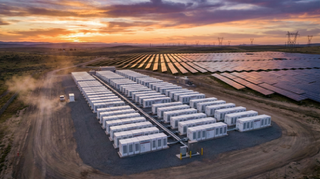


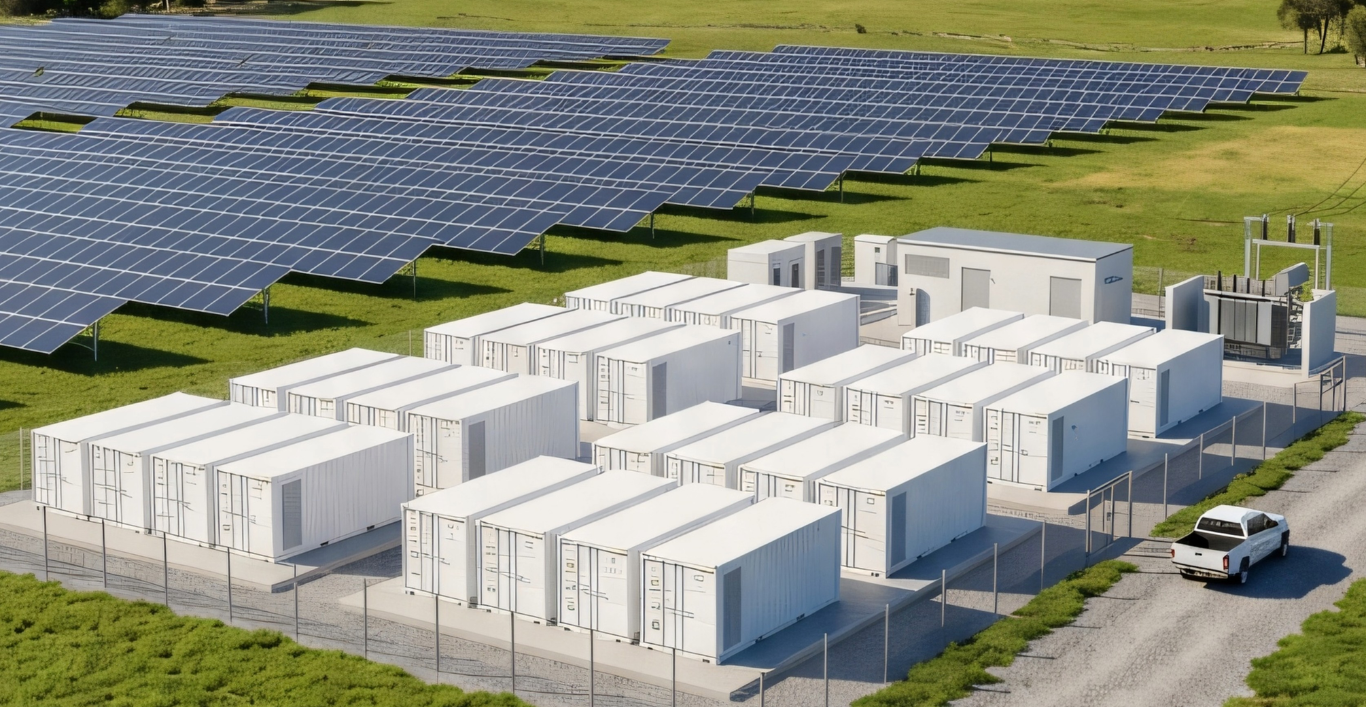
Battery Energy Storage Systems (BESS) are rapidly becoming critical infrastructure for renewable integration, energy shifting, grid stability, and flexible power generation across the GCC, Africa, and international power markets. Yet a technically sound BESS is not automatically a bankable BESS.
For developers, lenders, and investors, the fundamental question is not simply whether the battery can operate today - it is whether the project can deliver predictable power and energy, safely and consistently, under defined operating conditions throughout its contractual life.
That requires more than selecting a proven battery technology. Bankability is built through the alignment of technology, engineering, performance modelling, warranties, controls, safety, grid compliance, testing, and contractual risk allocation.
01.What Does Bankability Mean for a BESS?
For a BESS project, bankability is ultimately about reducing uncertainty. Lenders and investors need confidence that the technology will perform as specified; the system will remain available over its operating life; degradation assumptions are realistic; grid requirements can be met; safety risks are appropriately controlled; performance guarantees are enforceable; and technical risks are clearly allocated between the OEM, EPC, operator, and project company.
Bankability is not achieved simply through a competitive EPC price or a well-known battery brand. It is created when technical assumptions can be demonstrated, contractual commitments can be measured, and project risks can be understood and managed.
02.Start With the Use Case - Not the Battery
One of the first bankability decisions is made before the battery is even selected. A BESS must be sized around its intended application. Energy shifting, renewable firming, frequency regulation, capacity support, peak shaving, and grid ancillary services each impose different requirements on MW rating, MWh capacity, duration, C-rate, cycling frequency, response time, state-of-charge window, and degradation profile.
A system designed around an arbitrary 2-hour or 4-hour configuration can therefore be technically optimized for the wrong commercial objective. The engineering process should instead begin with a clear chain of logic:
This creates a direct link between the commercial model and the technical design - one that should be established before, not after, equipment selection.
03.Revenue Model and Contracted Duty Cycle
A bankable BESS design must reflect how the project will actually generate revenue. The contracted operating profile determines how frequently the battery cycles, how much energy is throughput, how long it operates at different power levels, and how much state-of-charge reserve must be maintained.
These factors directly influence degradation, usable energy, augmentation requirements, efficiency, availability, and warranty conditions. The technical model should therefore establish a clear relationship between:
This is particularly important where a project combines energy shifting with ancillary services or capacity obligations. A degradation model based on one operating profile cannot reliably support a financial model or warranty based on another.
The bankability question is not simply whether the battery can perform the required duty - it is whether the contracted duty, technical design, degradation assumptions, warranty and revenue model remain consistent over the project life.
04.Battery Performance and Degradation
Battery degradation is one of the most important long-term uncertainties in BESS financing. Nameplate MWh does not represent the energy that will necessarily be available throughout the project life.
Degradation depends on cell chemistry, operating temperature, state of charge, depth of discharge, C-rate, cycling frequency, calendar ageing, and operating strategy. A bankable project therefore needs a degradation model based on technology-specific data and the actual project operating profile - not generic manufacturer curves applied irrespective of duty cycle. The engineering chain should be:
This distinction is particularly important where the project carries long-term capacity or availability obligations, since the gap between nameplate and usable capacity is exactly where financial models can become exposed.
05.Thermal Management Is a Bankability Issue
Temperature affects more than battery life. In hot climates - a defining condition for the GCC and much of the African BESS pipeline - thermal conditions ripple through the entire plant:
The thermal design should therefore reflect the actual site environment - maximum ambient temperature, solar radiation, humidity, dust, and operating profile - rather than a standardized design-temperature assumption.
Battery temperature and thermal uniformity should be demonstrated against the OEM's specified operating limits. HVAC capacity, redundancy, and control philosophy should also be evaluated together with the battery and PCS rather than treated as an isolated mechanical package.
For lenders, this matters because thermal assumptions ultimately feed into degradation, availability, efficiency, and warranty risk - all of which sit directly upstream of the revenue forecast.
06.PCS Performance Can Determine Deliverable Power
The PCS is the interface between the battery and the grid, and it can become the critical determinant of plant performance. The engineering review should consider continuous power capability, temperature-related derating, overload capability, reactive-power performance, harmonic performance, grid-support functions, control response, and auxiliary consumption. OEM derating curves should be established early and assessed against the project's actual ambient conditions.
The important distinction - and one that is easy to lose in a technical datasheet - is this: installed MW is not necessarily the same as guaranteed deliverable MW.
Once equipment derating, auxiliary consumption, operating constraints, and applicable grid limitations are considered, the number a lender should underwrite is the contractually defined guaranteed deliverable figure, not simply the nameplate rating.
“Installed MW is not necessarily the same as guaranteed deliverable MW.”
07.Inverter-Duty Transformers and MV Equipment
The power-conversion chain does not end at the PCS. Inverter-duty transformers and medium-voltage equipment must be evaluated for the electrical and thermal characteristics of inverter-based operation, including harmonic losses, waveform distortion, thermal loading, switching-frequency effects, cooling requirements, insulation levels, short-circuit withstand, ambient-temperature derating, and actual operating duty.
Transformer and MV equipment specifications should be based on the complete PCS operating envelope rather than treating the BESS as a conventional load or generator. This is particularly important at utility scale, where hundreds of MW may be aggregated through multiple PCS and transformer blocks and even small per-unit derating errors can compound across the plant.
08.BMS and EMS: The Control Architecture Matters
The BMS protects the battery. The EMS determines how the plant operates. Their interaction is therefore central to both performance and safety.
The BMS must monitor and protect parameters such as cell voltage, cell temperature, state of charge, and state of health, and respond to abnormal operating conditions. The EMS must coordinate dispatch, state-of-charge management, power commands, grid-support functions, PCS operation, and interaction with SCADA and higher-level plant controls.
A dispatch command requesting maximum output should never be able to override a BMS protection limit. This hierarchy is a safety requirement, not a control preference, and it should be validated through simulation and integrated testing before commercial operation.
09.Grid Integration and Compliance
A BESS can be technically excellent and still become unbankable if it cannot obtain grid approval or meet its contracted grid functions.
Early engineering should address load flow, short-circuit studies, dynamic performance, harmonic assessment, protection coordination, voltage and frequency ride-through, reactive-power capability, active-power response, and the applicable utility grid-code requirements.
These requirements are not generic across the region. A BESS project connecting under DEWA, ADDC/TRANSCO, SEWA or EDC in the UAE faces different technical and grid-interface requirements than one connecting to the National Grid SA network or working within SEC and SPPC requirements in Saudi Arabia. Weak-grid conditions common under OETC in Oman, Kahramaa in Qatar, EWA in Bahrain, or across several African transmission networks introduce a different and often more stability-sensitive study emphasis.
These studies should also reflect the actual PCS technology and control characteristics. An inverter-based resource generally provides fault current that is lower and more tightly controlled by inverter controls and current limits than conventional synchronous generation. This can materially change protection coordination and fault-level assumptions.
Grid compliance should be demonstrated during development, not discovered during commissioning.
10.Safety and Fire Engineering
Safety is one of the most closely scrutinized areas of BESS technical due diligence. The assessment should cover the complete safety chain:
Applicable IEC, UL, NFPA, and local authority requirements should be identified based on the project jurisdiction and technology.
NFPA 855 provides dedicated requirements for stationary energy storage systems, while UL 9540A testing can provide valuable evidence of thermal runaway and propagation characteristics. However, UL 9540A is a test methodology, not a substitute for a broader site-specific fire-safety strategy. The results should feed into, not stand in for, that strategy.
Safety is not simply a compliance item - it is a lender, insurer, and permitting consideration that can directly affect project schedule and financial risk.
11.Environmental Conditions Must Be Reflected in the Design
BESS projects in the GCC and other harsh environments require more than temperature analysis. Dust, sand, humidity, and salinity can affect HVAC systems, filters, cooling performance, electrical insulation, corrosion, outdoor switchgear, and maintenance requirements.
Environmental design should be incorporated into equipment selection, enclosure design, filtration, corrosion protection, insulation coordination, and O&M planning from the outset.
A bankable design should demonstrate that the equipment's environmental rating and maintenance strategy are genuinely consistent with actual site conditions, not simply the manufacturer's standard climate rating.
12.Integrated System Testing
Component-level FAT is necessary, but it does not prove that the complete BESS will perform correctly as a system. The integrated plant should progressively validate the full chain:
Testing should verify active and reactive power response, ramp rate, state-of-charge control, round-trip efficiency at the contractually defined measurement boundary, protection, communications, emergency shutdown, HVAC failure response, BMS alarms, PCS trips, and grid-support functions.
This evidence becomes particularly valuable during Independent Engineer and lender technical due diligence because it demonstrates that the integrated system - rather than only individual components - performs as contracted.
13.Documentation Is Evidence of Engineering Maturity
For investors and lenders, documentation is more than a project deliverable - it is evidence of how well the project has actually been engineered. A mature BESS project should have a controlled engineering baseline covering single-line diagrams, equipment specifications, battery and PCS data sheets, degradation models, thermal studies, electrical studies, protection philosophy, grid-compliance studies, fire-safety documentation, control architecture, performance test procedures, QA/QC documentation, interface responsibility matrices, and warranty and performance guarantee schedules.
A degradation model that assumes one operating profile while the warranty is based on another is a bankability problem. Technical consistency is itself a form of risk management.
14.Warranty and Performance Guarantees
A strong warranty is not simply a long warranty period. The important question is: what exactly is being guaranteed, under what conditions, and how is performance measured?
Contracts should clearly define available power, available energy, degradation, round-trip efficiency, availability, response time, operating conditions, test methodology, measurement boundaries, exclusions, augmentation obligations, and remedies for non-performance. The warranty should also reflect the actual contracted duty cycle, annual energy throughput, cycling assumptions, operating temperature range, and state-of-charge limits.
Responsibilities between the battery OEM, PCS supplier, EPC, and operator should be clearly allocated - this is what prevents technical gaps from becoming commercial disputes later in the project.
15.Independent Engineering and Technical Due Diligence
Independent Engineer (IE) review provides a critical bridge between project engineering and financing. A robust technical due diligence process should challenge technology selection, equipment performance, degradation assumptions, thermal design, PCS capability, grid compliance, fire safety, availability assumptions, warranty structure, performance guarantees, testing methodology, augmentation strategy, and long-term O&M strategy.
The purpose is not simply to confirm that the design complies with standards. It is to determine whether the technical assumptions supporting the financial model are credible and sufficiently protected by contracts and evidence.
For lenders and investors, this independent assessment can provide an objective view of whether the project's technical risk profile is consistent with the proposed financing structure.
16.Common BESS Bankability Gaps
A handful of recurring gaps show up across BESS projects seeking financing. Recognizing them early - rather than during Independent Engineer review - is what separates a smooth diligence process from a delayed one.
| Gap | Risk | Better Approach |
|---|---|---|
| Designing around nameplate capacity | Actual usable capacity does not match the financial model | Model usable energy, degradation, and operating limits over the full project life |
| Treating temperature as an HVAC problem | Thermal effects on degradation, PCS performance, and auxiliary consumption are missed | Integrate thermal modelling into the complete plant design |
| Selecting the battery before defining the use case | Technology and configuration do not match the actual duty cycle | Define the commercial use case first |
| Leaving grid studies too late | Design changes, delays, and grid-compliance issues emerge during commissioning | Complete critical grid studies during early engineering |
| Relying on generic degradation assumptions | Capacity and revenue forecasts become unrealistic | Use validated, technology-specific degradation modelling |
| Mismatch between dispatch model and warranty assumptions | Contractual performance may not reflect actual operating duty | Align duty cycle, degradation model, warranty and financial model |
| Weak performance guarantees | Technical underperformance becomes difficult to enforce contractually | Define measurable guarantees, test conditions, and responsibilities before contract award |
| Leaving augmentation undefined | Project may meet initial capacity but fail to maintain it over the full term | Define augmentation triggers, sizing, responsibility, schedule, and costs upfront |
From Engineering to Bankability
Bankability is not achieved by selecting the lowest-cost battery or the most recognizable OEM. It is created when every major technical assumption can be traced to a design decision, a validated model, a test result, or an enforceable contractual commitment. For a utility-scale BESS, the chain is clear:
A weakness anywhere in that chain can become a project risk.
A strong engineering approach connects the entire chain from the battery cell to the financial model. For developers, EPCs, utilities, lenders, and investors, that is what turns a technically compliant BESS into a bankable energy infrastructure asset.
At ENERZIX, headquartered in Sharjah Media City (SHAMS), UAE, we approach BESS engineering with this systems-level perspective - connecting technical design, grid integration, performance, safety, testing, and commercial requirements across the UAE, Saudi Arabia, the wider GCC, and African power markets. Our work spans BESS engineering, power system studies, grid integration, technical due diligence, and bankability-focused engineering support for renewable and power infrastructure projects.
Engineering for Clarity™.
Frequently Asked Questions
Bankability means lenders and investors can rely on the project's technical assumptions - that the technology will perform as specified, degradation is realistically modelled, grid requirements can be met, and risks are clearly allocated between the OEM, EPC, operator, and project company.
Yes. ENERZIX is headquartered in Sharjah, UAE, and provides BESS engineering, grid-compliance and technical due diligence support across the Emirates, including projects subject to utility and grid-interface requirements.
Yes. ENERZIX supports BESS engineering, grid-interface studies and technical due diligence for large-scale battery storage programs in Saudi Arabia, including projects involving National Grid SA, SEC and SPPC requirements.
Yes. ENERZIX supports developers, EPCs and other project stakeholders across African power markets, with particular focus on grid integration, weak-grid conditions, environmental design for harsh site conditions, and bankability-focused technical due diligence.
Nameplate capacity does not account for degradation, thermal derating, auxiliary consumption, operating limits, state-of-charge requirements, or grid-limited output. Financial models should therefore be based on contractually defined deliverable power and usable energy rather than nameplate rating alone.
An Independent Engineer reviews technology selection, degradation assumptions, thermal and PCS design, grid compliance, fire safety, warranties, augmentation, testing methodology, and long-term performance assumptions to determine whether the technical assumptions underlying the financial model are credible and adequately protected by contracts and evidence.
As early as possible in development - ideally before major equipment procurement. Leaving grid studies until late in the project can result in design changes, delays, and compliance issues being discovered during commissioning rather than during design review.
The duty cycle determines cycling frequency, energy throughput, degradation, efficiency, availability, and potentially augmentation requirements. It should therefore be consistent across the financial model, system design, degradation model, warranty and performance guarantees.

Dr. Aditya Narain
Ph.D. in Electrical Engineering - 20+ years of experience across power transmission, grid infrastructure and renewable energy projects across the UAE, Saudi Arabia, the wider GCC and Africa.
This insight is based on publicly available technical and industry information and is intended for general informational purposes. References to technologies, standards, utilities, companies or industry developments do not imply any affiliation, endorsement, partnership, project involvement or proprietary knowledge on the part of ENERZIX.