

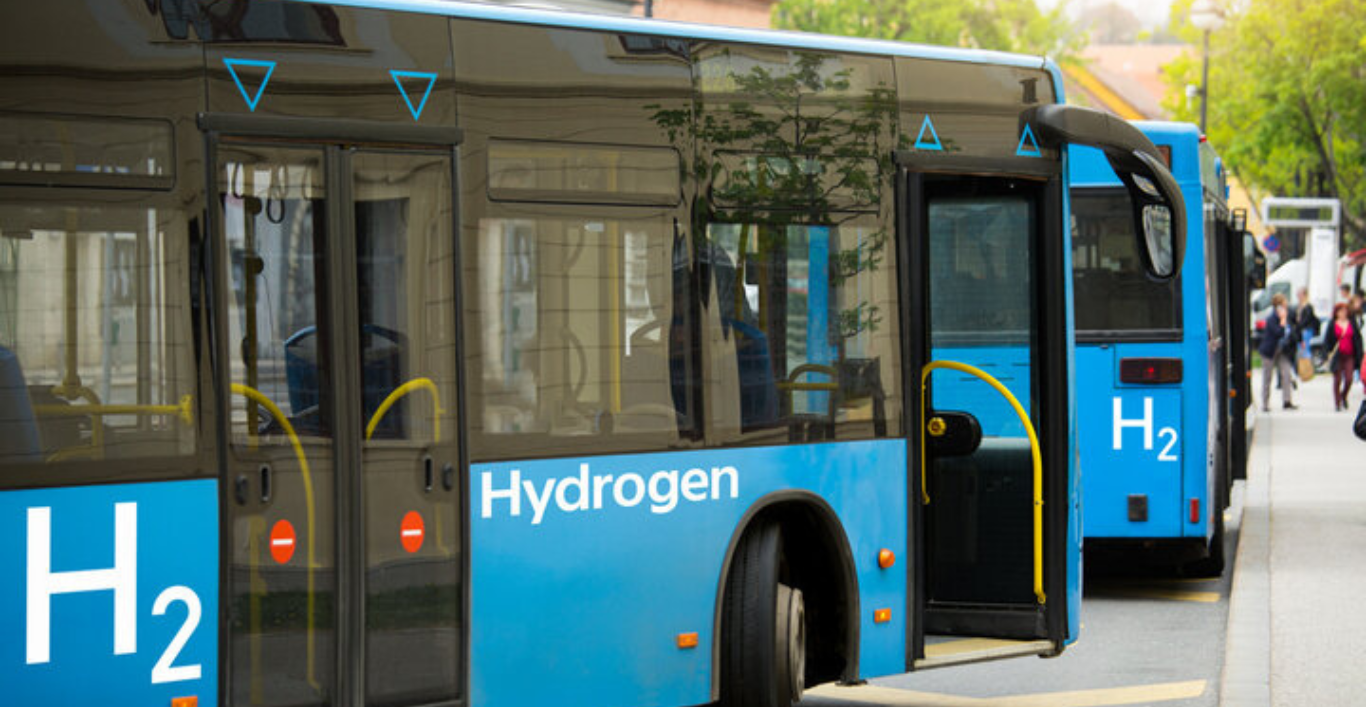
Hydrogen is emerging as one of the potential pathways for decarbonising selected heavy-duty and high-utilisation transport applications. However, the engineering case for hydrogen depends heavily on how the vehicle is used, where hydrogen comes from, how it is delivered, and how the complete energy system is designed.
For fleet operators and infrastructure developers in Saudi Arabia, the UAE and the wider GCC, the question is therefore not whether hydrogen fuel-cell vehicles are inherently better than battery-electric vehicles. The more important question is: where does hydrogen provide a genuine system-level advantage, and what infrastructure is required to make that advantage technically and commercially viable?
A hydrogen fleet is not simply a collection of fuel-cell vehicles. It is an integrated system connecting vehicle duty cycle, hydrogen demand, production or supply, storage, compression, refuelling, electrical infrastructure, renewable energy, grid integration and operating economics. Each decision affects the next.
Duty cycle determines energy demand. Energy demand determines hydrogen requirements. Hydrogen demand determines production, storage and refuelling capacity. Where hydrogen is produced through electrolysis, renewable generation and electrical infrastructure become additional design constraints. At fleet scale, the engineering challenge is therefore not selecting a fuel cell in isolation - it is designing the complete energy and mobility system around the duty cycle it needs to serve.
01.Start With the Duty Cycle, Not the Technology
One of the most consequential mistakes in fleet electrification is selecting a powertrain before properly understanding how the fleet operates. Route distance, payload, operating hours, terrain, ambient temperature, shift patterns, required availability, refuelling windows and depot configuration all establish fundamental constraints on technology selection.
A short urban delivery fleet returning to a depot every evening may be well suited to battery-electric vehicles. A high-utilisation heavy-duty fleet operating multiple shifts, covering long distances or carrying substantial payloads may present a different engineering case. Hydrogen can become particularly relevant where rapid refuelling, extended operating periods, high utilisation or payload sensitivity are important considerations.
Reversing that sequence can result in a technically impressive system that is poorly matched to the operation it is supposed to serve.
Technology selection should follow the duty cycle - not determine it.
02.Powertrain Sizing: Efficiency Is Only Part of the Equation
Proton Exchange Membrane Fuel Cells (PEMFC) are widely considered for transport applications because of their power density, operating characteristics and scalability across different vehicle classes. A fuel-cell system converts the chemical energy of hydrogen into electricity through an electrochemical process. Hydrogen is supplied to the anode while oxygen is supplied at the cathode, producing electricity and water. A simplified relationship is:
where P(stack) is fuel-cell stack power, η(FC) is fuel-cell efficiency, ṁ(H₂) is hydrogen mass flow rate, and LHV(H₂) is the lower heating value of hydrogen.
The calculation itself is straightforward. The engineering challenge lies in determining the appropriate stack capacity for the actual operating envelope. Peak traction power, sustained power requirements, gradients, payload, auxiliary loads, ambient temperature and transient operating conditions all influence the required system architecture.
Oversizing the stack can increase cost, weight and thermal-management requirements. Undersizing it can compromise performance under sustained or demanding operating conditions.
Fuel-cell sizing is a system-design decision, not simply an equipment-selection exercise.
03.Hydrogen Storage: Range, Weight and Packaging Must Be Balanced
Hydrogen storage is one of the key engineering considerations in vehicle design. The objective is not to maximise onboard hydrogen capacity. It is to provide sufficient usable hydrogen for the required operating cycle while controlling vehicle weight, packaging constraints, cost and refuelling requirements. For heavy-duty applications, this trade-off becomes particularly important because payload directly affects fleet economics.
Storage configuration depends on required driving range, hydrogen consumption, operating pressure, tank technology, vehicle architecture, payload, available refuelling infrastructure, and required reserve capacity. The storage system must also be integrated with the vehicle chassis, fuel-cell system, thermal management and safety architecture.
A system designed around an assumed maximum range may carry significantly more storage than the actual route requires. Conversely, insufficient storage can create additional refuelling stops and undermine vehicle availability.
The objective is not maximum range on paper. It is the right range for the actual duty cycle.
04.Thermal Management and Durability: The Real Test of Fleet Viability
A fuel-cell system that performs well under controlled test conditions is not automatically suitable for continuous fleet operation. Thermal management, operating temperature, transient loading, humidity, ambient conditions and duty-cycle severity all influence long-term system performance and durability.
This becomes particularly relevant in Saudi Arabia, the UAE and other hot-climate markets, where high ambient temperatures can increase thermal-management requirements and affect overall system efficiency and component performance. Heavy-duty applications can place sustained demands on the fuel-cell stack and balance-of-plant systems. Cooling systems therefore need to be designed around the actual operating envelope rather than a nominal rating.
Engineering assessment should consider continuous and peak loading, ambient temperature, cooling capacity, degradation, cold-start requirements where applicable, maintenance intervals, component replacement strategy, and expected operating hours over the vehicle life.
Durability is not a secondary specification. It is a core determinant of fleet availability and lifecycle economics.
05.Hydrogen Production and Supply: The Vehicle Is Only One Part of the System
For a large hydrogen fleet, the availability and cost of hydrogen can ultimately become more important than the vehicle technology itself. Hydrogen may be supplied from external production facilities or produced locally through electrolysis. Where electrolysis is considered, the system introduces another layer of engineering:
The electrical demand of electrolysers must be assessed alongside renewable generation profiles, grid availability, power quality, connection capacity and operating strategy. This is where hydrogen mobility begins to overlap directly with renewable-energy and power-system engineering.
If renewable electricity is used to produce hydrogen, the project needs to consider not only electrolyser capacity but also generation variability, electrical connection requirements, power-conversion equipment, energy storage where appropriate and the resulting hydrogen production profile. For projects in Saudi Arabia and the UAE, this integrated approach can be particularly important where large renewable-energy resources, industrial loads and transport demand are being considered together.
Hydrogen supply should be engineered as part of the fleet system - not treated as a commodity assumption.
06.Refuelling Infrastructure Is a Fleet-Availability Decision
Hydrogen refuelling infrastructure must be designed around actual fleet operations. Station capacity cannot be determined solely from average daily hydrogen consumption. The critical question is: how much hydrogen must be delivered, to how many vehicles, within what refuelling window?
This requires consideration of the number of vehicles, hydrogen consumption per vehicle, daily operating hours, refuelling frequency, simultaneous vehicle demand, compression capacity, buffer storage, dispensing capacity, station redundancy, and future fleet expansion.
A station may have adequate average capacity but still create operational bottlenecks if many vehicles require refuelling within the same short period. This is particularly important for multi-shift operations where vehicle availability directly affects revenue-generating hours.
Station sizing is a fleet-scheduling and availability decision as much as it is a hydrogen-supply decision.
07.Vehicle Architecture: Integrating Storage, Power and Thermal Systems
Hydrogen storage, fuel-cell stacks, power electronics, cooling systems and balance-of-plant components all compete for the same vehicle envelope. The engineering challenge is to optimise the complete architecture rather than individual components.
Storage placement affects weight distribution and packaging. Stack placement affects serviceability and thermal routing. Cooling-system requirements influence auxiliary power consumption and space allocation. Hydrogen storage configuration affects vehicle centre of gravity and payload.
A configuration optimised purely for maximum hydrogen capacity may compromise payload or maintenance access. Similarly, a compact architecture may create thermal-management or serviceability constraints. The optimum design is therefore not necessarily the one with the largest storage capacity or highest nominal power - it is the architecture that best balances range, payload, thermal performance, safety, serviceability and lifecycle cost for the actual operating profile.
08.Grid Integration and Energy Infrastructure: The Missing Engineering Layer
For large-scale hydrogen mobility, the electrical infrastructure supporting the hydrogen system can become a major project constraint. Electrolysers, compression systems, cooling equipment, pumps, auxiliary systems and refuelling infrastructure all contribute to the site's electrical demand.
Depending on project scale, engineering assessment may require grid connection capacity, load flow, short-circuit levels, protection coordination, power quality, harmonic performance, transformer capacity, medium- and high-voltage infrastructure, renewable generation integration, BESS integration, and an energy-management strategy.
Where renewable generation is integrated with hydrogen production, the engineering problem becomes even more interconnected:
may need to operate as one coordinated energy system. This is particularly relevant for large fleet depots, logistics hubs, ports and industrial facilities where hydrogen demand is concentrated at a single location. For Saudi Arabia and the UAE, this creates a direct connection between hydrogen mobility engineering and power-system engineering.
Hydrogen mobility at scale is also a power-system engineering problem.
09.Total Cost of Ownership Depends on the Entire System
Vehicle purchase price alone cannot determine whether a hydrogen fleet is commercially viable. A meaningful Total Cost of Ownership (TCO) assessment should consider the complete system, including vehicle CAPEX, hydrogen production or procurement cost, renewable electricity cost where applicable, refuelling infrastructure CAPEX, grid connection and electrical infrastructure, station utilisation, hydrogen storage and compression, maintenance, fuel-cell replacement or refurbishment, vehicle availability, operating hours, payload implications, residual value, and financing structure.
The comparison should also consider the relevant alternative - typically diesel or battery-electric - under the same operating conditions. Two fleets using similar vehicles can produce materially different economics depending on route density, station utilisation, hydrogen supply arrangements, electricity prices and infrastructure investment. This is why the commercial case cannot be separated from engineering design.
The right question is not simply "what does the vehicle cost?" It is "what does the complete system cost to operate reliably over its service life?"
10.Where Hydrogen Makes Engineering Sense
Hydrogen should not be treated as a universal replacement for battery-electric mobility. Its strongest potential is likely to emerge in applications where the operating characteristics create a meaningful advantage from rapid refuelling, high utilisation, extended range or reduced dependence on very large battery packs.
Potential applications include heavy-duty road transport, regional and long-haul freight, port and logistics operations, high-utilisation commercial fleets, selected rail applications, material-handling equipment, and other applications where operating time and payload are critical. Battery-electric systems may remain the more efficient solution for many shorter-distance and lower-utilisation applications.
The engineering objective is therefore not to promote one technology over another. It is to identify the technology that best fits the operational and energy-system requirements of the application. That is the basis of a credible technology assessment.
11.From Technology Selection to Bankable System Design
A hydrogen fleet strategy ultimately needs to withstand more than a technical specification review. The project may need to satisfy fleet operational requirements, hydrogen supply assessment, electrical infrastructure studies, grid-connection requirements, infrastructure capacity assessment, TCO analysis, technology risk assessment, maintenance and availability assumptions, project execution requirements, and technical due diligence by investors or financiers.
The fleet operator asks whether the vehicles can meet the duty cycle. The infrastructure team asks whether hydrogen production, storage and refuelling capacity can support the fleet. The electrical engineer asks whether the grid and power infrastructure can accommodate the system. The commercial team asks whether the lifecycle economics are sustainable. The investor or lender asks whether the technical assumptions supporting the business case are credible.
A robust hydrogen project anticipates all of these questions during engineering - not after deployment decisions have already been made.
Bankability begins with engineering decisions that are technically coherent, operationally realistic and commercially defensible.
Engineering the Energy System, Not Just the Vehicle
The difference between a hydrogen mobility pilot and a scalable fleet strategy is rarely determined by one technology choice. It is determined by how effectively the project connects duty cycle, vehicle requirements, hydrogen demand, production and supply, storage, refuelling, electrical infrastructure, renewable energy, grid integration and operating economics. Each decision affects the next.
Together, these factors determine whether the project is technically viable and commercially sustainable. This is why hydrogen fleet electrification requires more than fuel-cell expertise. It requires system-level engineering judgement - understanding how decisions made at the vehicle level propagate through hydrogen infrastructure, renewable energy, power systems, fleet operations and long-term project economics.
Hydrogen Fleet and Energy Infrastructure Engineering
At ENERZIX, we view hydrogen not as an isolated fuel technology, but as part of a broader energy infrastructure system. Our engineering and advisory approach brings together renewable energy, hydrogen systems, BESS, power systems, grid integration and electrical infrastructure to assess how emerging energy technologies can work together at project scale.
We support developers, infrastructure investors, fleet operators, EPC contractors and project stakeholders with engineering advisory across hydrogen and renewable-energy system assessment, electrolyser and electrical infrastructure integration, grid connection and power-system requirements, renewable energy and BESS integration, hydrogen infrastructure planning, technology and system-level evaluation, technical due diligence, conceptual and detailed engineering, and techno-commercial engineering assessment.
For projects in Saudi Arabia and the UAE, this integrated engineering perspective is particularly relevant where hydrogen production, renewable energy, BESS, electrical infrastructure and transport demand need to operate as one coordinated system.
The objective is not to force a particular technology into an application. It is to establish technical clarity before investment, procurement and deployment decisions are made.
Engineering for Clarity™.

Dr. Aditya Krishna
Ph.D. in Electrical Engineering, IEEE PES Member - 20+ years of experience across power transmission, grid infrastructure and renewable energy projects in the Middle East.
This insight is based on publicly available technical and industry information and is intended for general informational purposes. References to technologies, standards, utilities, companies or industry developments do not imply any affiliation, endorsement, partnership, project involvement or proprietary knowledge on the part of ENERZIX.